


Iran has reiterated its conditions for ending the war with the US as it downplayed indirect talks on the sidelines of the UN General Assembly.
A spokesperson for Iran’s Foreign Ministry said on Wednesday that the country had maintained its negotiating stance in talks with US officials, demanding the US end its blockade on Iranian ports and release Iran’s frozen assets.
Esmail Baghaei said the indirect talks took place via Qatari mediators on the sidelines of the UN General Assembly.
“This was not anything new,” Mr Baghaei said of Iran’s conditions.
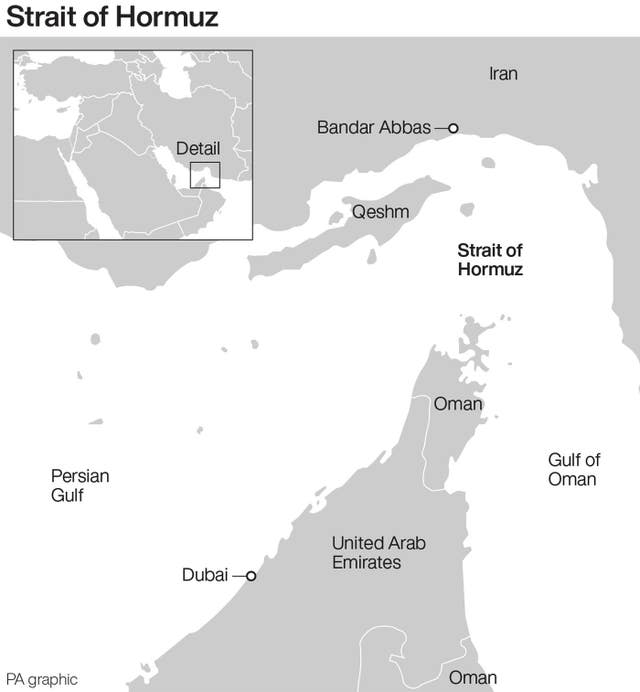
The unscheduled meeting – the first indirect talks between US and Iranian officials since a June ceasefire unravelled – came as intermittent attacks continue in the Strait of Hormuz off Iran’s coastline, where commercial shipping remains below pre-war levels.
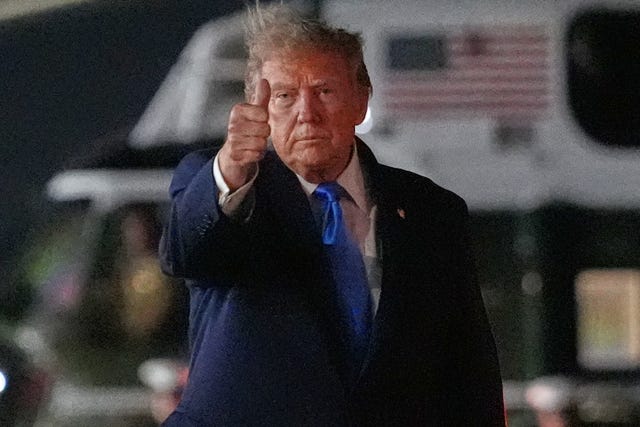
The talks came even as President Donald Trump threatened in his address to the UN General Assembly that he may “annihilate” the Islamic Republic if a deal is not reached soon to end the nearly seven-month war.
Mr Trump told reporters that his chief envoys, Steve Witkoff and Jared Kushner, met for about three hours with the Iranian officials on the sidelines of the annual gathering of world leaders but he offered few details about how the discussions transpired or the substance of the exchange.
“It was a very good meeting,” Mr Trump said. The president later added that the Iranian officials were “not the highest level, but it’s something”.
Mr Witkoff said in a post on X that the talks were conducted through mediators who shuttled between the US and Iranian teams. He added that he was hopeful the effort “will prove constructive and promising”.
The engagement comes after months of US-Iran communications languishing following the collapse of a short-lived ceasefire that was brokered in June. US and Iranian negotiators met separately with Qatari and Pakistani mediators in Doha in early July for indirect talks.
Earlier Tuesday, US secretary of state Marco Rubio said Mr Trump is open to meeting Iran’s president, Masoud Pezeshkian, while he is in New York for the General Assembly.
“This is a president that will meet with anybody for the most part, because he believes that engaging with people is important if you’re going to solve problems,” Mr Rubio said on NBC’s Today show. “It doesn’t mean you’re going to end up agreeing with them, but it’s important.”
Mr Trump also met on Tuesday with leaders and senior officials from Gulf Co-operation Council nations — Bahrain, Kuwait, Oman, Qatar, Saudi Arabia and United Arab Emirates — as well as Jordan to discuss the way ahead with the war in Iran.
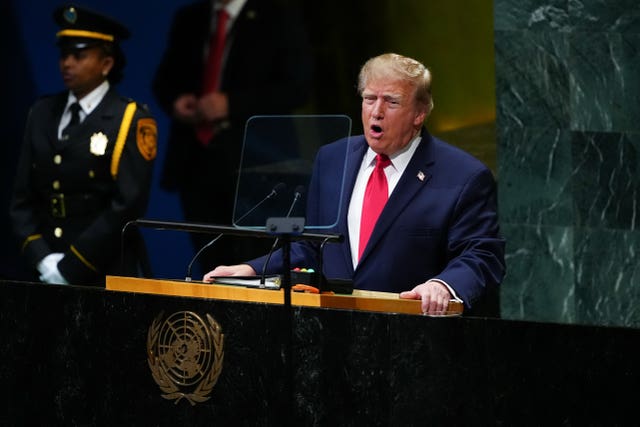
In his address to the General Assembly, Mr Trump made the case that he has shown fortitude while other leaders have equivocated as he defended his decision to start a war with Iran.
But Mr Trump also suggested that he could be at a crossroads in the conflict even as he called on the Islamic Republic to fully reopen the Strait of Hormuz and return to the negotiating table to find a settlement to end the conflict.
“I have a big decision to make,” Mr Trump said. “Will a deal be made with Iran that lets them rebuild and create a far greater country than it ever was before, maybe one of the greatest in the Middle East or even the world. Or do I annihilate the Islamic Republic and do it quickly, never giving them a chance to kill and destroy people and countries again?”
The war has grown more complicated even though strikes by the United States and Israel have killed much of Iran’s top leadership and destroyed its air force and navy, while a US blockade of Iranian oil has left Tehran in an economic shambles.
The energy market continues to be spooked by the war and oil prices remain elevated. Saudi Arabia earlier this month closed a key pipeline that acted as a relief valve for oil blocked in the Gulf. The kingdom made the move after the pipeline came under attack by Iran-backed militants in Iraq.
At the same time, territorial grabs by the Yemen-based Houthi rebels, another Iranian-backed group, near the Bab al-Mandab Strait has now made it treacherous for oil carriers to use that Red Sea shipping lane.
Meanwhile, the United Kingdom Maritime Trade Operations (UKMTO), which issues warnings about maritime attacks and military activity, said another vessel was struck on Wednesday by an “unknown projectile” while transiting the Strait of Hormuz.
The strike sparked a fire and forced the crew to evacuate. The origin of the attack, the first reported in two days, was unclear.
The incident highlighted the continuing danger to ships attempting to navigate the waterway. Some vessels appear to be making “dark passages” without transmitting identifying signals, but Iran and the United States have maintained their competing blockades.
Commercial traffic remains well below pre-war levels, according to ship-tracking data from analytics firm Kpler.
Restrictions on shipping through the strait have become one of the war’s most persistent consequences. Before the conflict, a fifth of the world’s traded oil passed through the narrow waterway, along with large volumes of natural gas, fertiliser and other petroleum products.


Share